




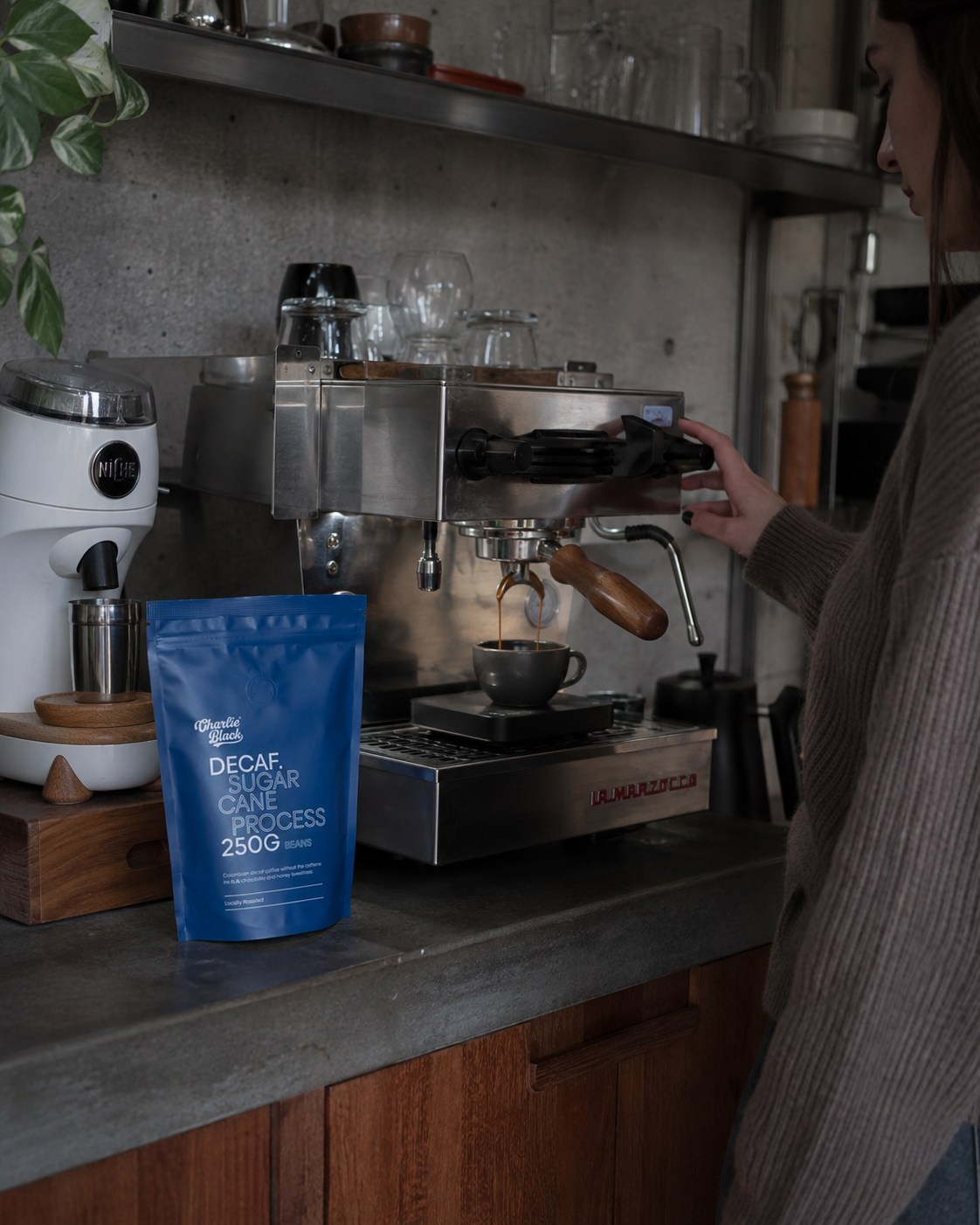


Eight roasters, and nearly all of them went to Colombia
We have run decaf from eight different Adelaide roasters across nine releases. Going back through them turned up something we did not expect.
Three of them, sourcing completely separately, landed on coffee from the same Colombian town. Vice, Elusive and Bobby's all put up a decaf out of Apía in Risaralda. Not the same country, not the same region, the same municipality. Nobody coordinated that.
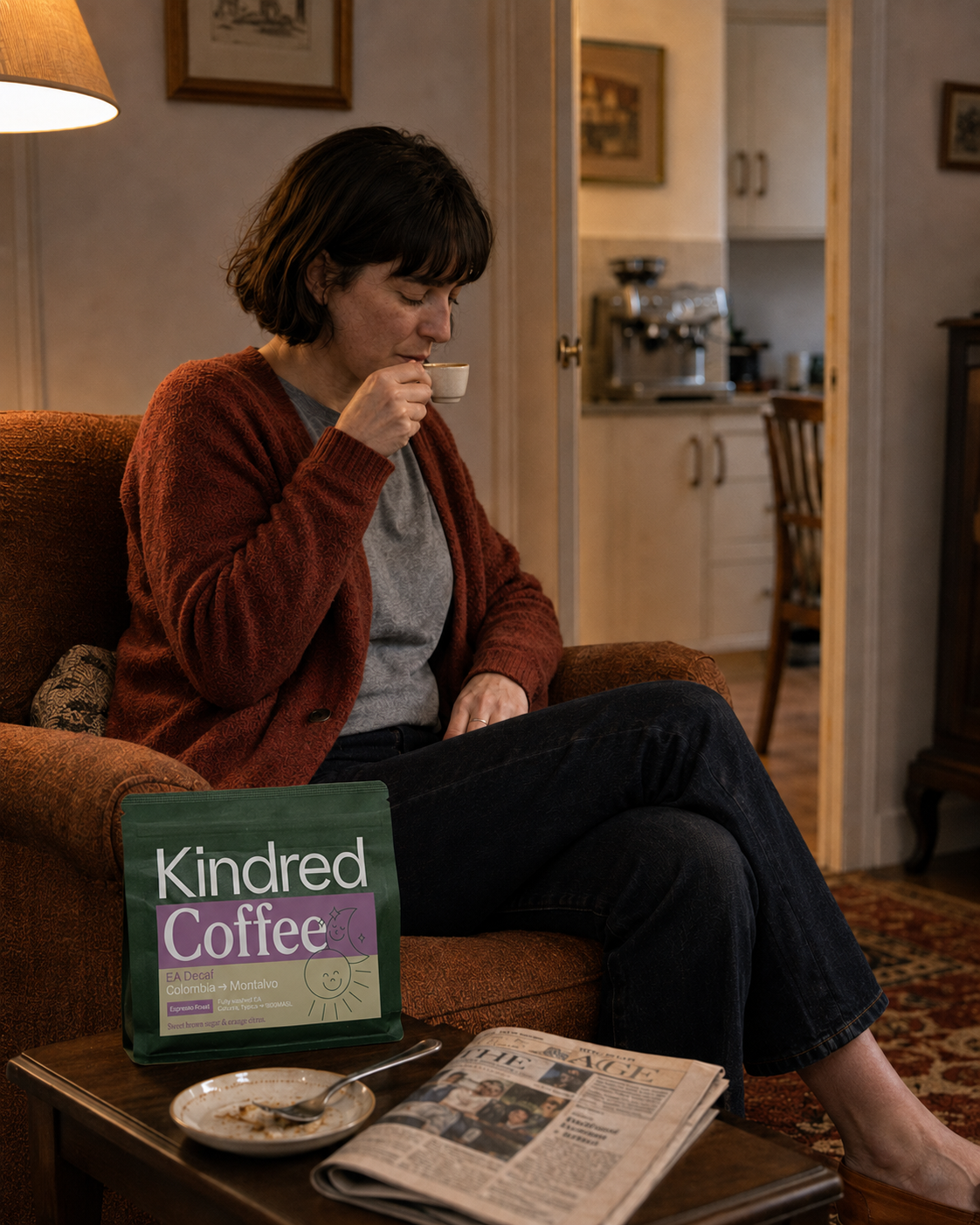
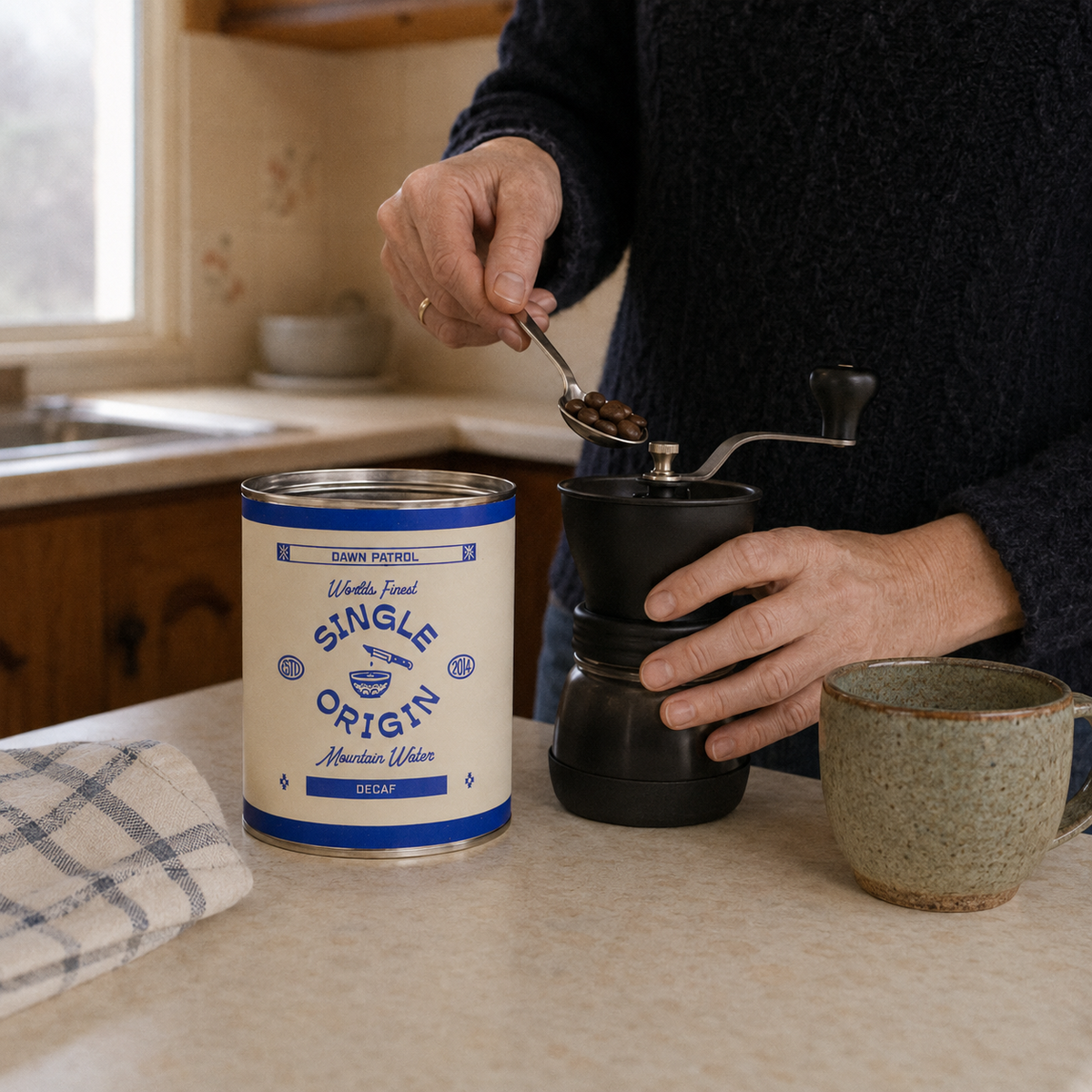
Widen it out and the pattern holds. Seven of the eight were Colombian or part-Colombian. Two Fish went to Inza in Cauca at 1,800 to 2,100 metres, Kindred to Montalvo in Tolima at 1,800. Only Dawn Patrol went elsewhere entirely, to Chiapas in Mexico. Peninsula split the difference and blended a Mexican lot with a Colombian one.
Most decaf shops sell you one decaf and one process. Rotating roasters shows you what the local specialty scene actually does with decaf.
The process
How decaf actually gets made
Almost every decaf we have sent used the sugarcane process. Six of the eight outright, and half of a seventh. It uses ethyl acetate, or EA, a compound that occurs naturally in ripe fruit and for decaf is usually derived from fermented sugarcane. The green beans get soaked and steamed until the cells swell open, then washed with EA, which bonds to the caffeine and carries it out. Then rinsed, dried and roasted like any other coffee.
Colombia grows sugarcane. Colombia grows coffee. So the process and the origin travel together, which is most of the reason a decaf shelf in Australia looks the way it does.
The other one we have run is the Mountain Water Process, twice. Dawn Patrol's Chiapas lot and half of Peninsula's blend both came through Descamex in Mexico, a water-only process.
What about Swiss Water?
You will see Swiss Water on a lot of decaf sold in Australia, and it is a good process. It is water-only, using green coffee extract and carbon filtration. We have not run one. Not because there is anything wrong with it, but because the roasters we work with have gone with sugarcane and Mountain Water instead. If a Swiss Water lot comes through the rotation, we will say so.
The cup
Does the decaf actually taste like anything?
Yes, and the tasting notes from recent releases are the argument. Kindred's came through as brown sugar and orange citrus. Dawn Patrol's as cooked apple and butterscotch. Peninsula's leaned molasses and marmalade. Elusive's had berries and pineapple in it, which is not a sentence people expect about decaf.
So why does decaf have a bad name? For a long time it was where lower-grade green coffee ended up. Beans that were not good enough to sell as regular got decaffeinated instead, roasted dark to hide it, then sat on the shelf because decaf sells slower. Ours comes from named farms and towns, roasted fresh and shipped straight from the roaster. Nobody traces leftovers back to a town.
